Meloni Announces Plan to Ban Burqas and Niqabs in Schools and Limit Foreign Pupils per Class
Italian Prime Minister Giorgia Meloni has announced a government initiative to ban burqas and niqabs in schools while also proposing limits on the number of foreign students per class and mandatory Italian language instruction for certain parents.
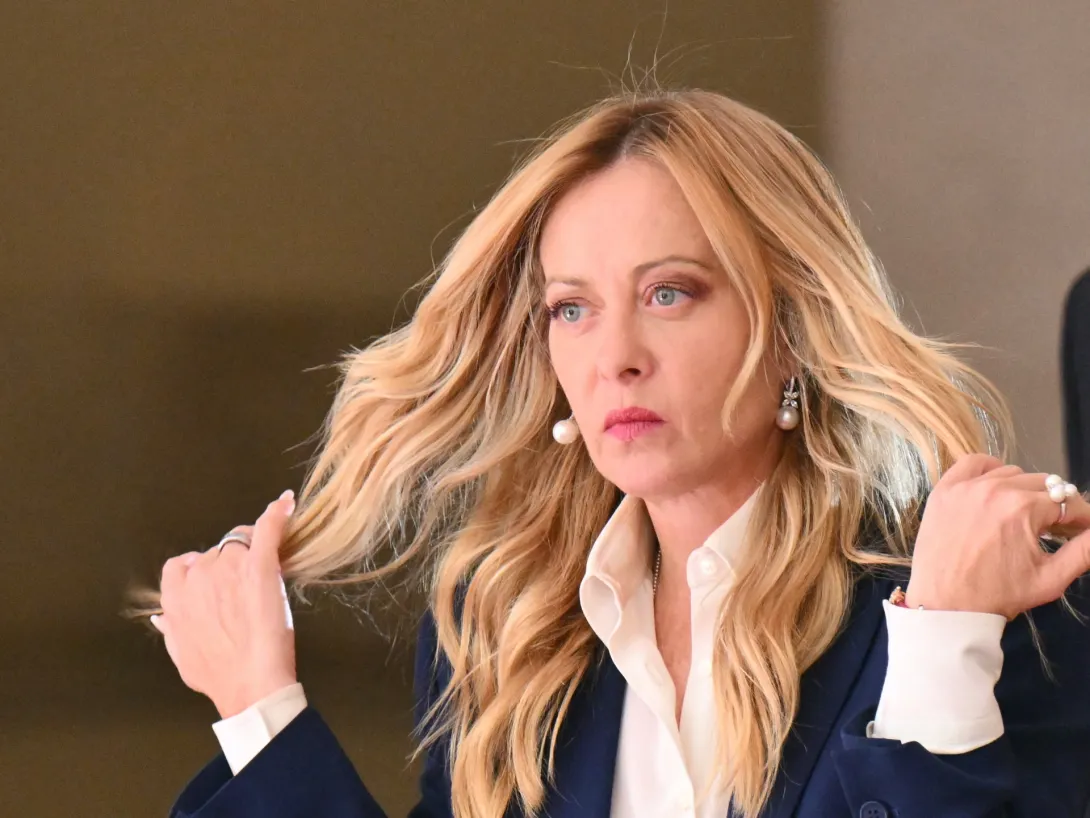
Italy’s Prime Minister Giorgia Meloni announced on September 20, 2026, that her government will soon introduce a measure banning burqas and niqabs in schools, while also capping foreign student quotas per class and requiring Italian lessons for certain parents. Those are confirmed points from her speech at the Brothers of Italy youth event. She presented the face‑covering ban as non‑negotiable, grounded in equality and cultural norms, and argued that overly high concentrations of foreign students can hinder integration. Practical implementation details—including the numerical cap on foreign students—remain unclear. The prospect of new restrictions on religious dress and immigration-linked classroom limits will likely spark debate over social cohesion, educational equality, and secularism. It remains to be seen how the Cabinet and Parliament will shape the final measure. The focal signal going forward is whether the Cabinet will define the unspecified cap on foreign students per class.
Key facts
- Giorgia Meloni said on September 20, 2026, she will soon present a Cabinet measure to ban burqas and niqabs in schools.
- The same measure would cap the number of foreign students per class and require parents of foreign students with serious integration difficulties to learn Italian.
- Meloni framed the face-covering ban as an assertion of gender equality and respect for Italian tradition.
- The policy has not yet been approved by the Cabinet, and key details—such as the cap size for foreign students per class—remain unspecified.
Meloni made the announcement during Fenix, the youth festival of her Brothers of Italy party, on September 20, 2026. Immigration, integration, and religious symbols have increasingly polarized political debate in Italy. The government’s planned measures arrive amid rising elections and discussions on national unity and education policy.
This initiative touches on integration policy, religious freedom, gender equality, and national identity—key flashpoints in Italian and European political discourse.
Italy’s Prime Minister Giorgia Meloni announced on September 20, 2026, that her government will soon introduce a measure banning burqas and niqabs in schools, while also capping foreign student quotas per class and requiring Italian lessons for certain parents. Those are confirmed points from her speech at the Brothers of Italy youth event [1].
Meloni defended the ban on full-face veils by saying, “in Italy no one, in the name of a real or supposed tradition, can decide that a young woman must hide herself,” framing it as a matter of gender equality and cultural coherence [2]. She also argued that a high concentration of non‑Italian speakers in a classroom could impede integration, characterizing such situations as “neglect” rather than successful inclusion [1].
Key details remain unspecified at this stage. Meloni did not clarify what the exact numerical limit on foreign students per class would be, nor when the Cabinet would formally review the proposal [1]. The measure still needs Cabinet and parliamentary approval, with potential for amendments.
The announcement opens a complex policy debate at the intersection of secularism, integration, educational equity, and religious expression in Italy. Advocates may applaud the emphasis on cohesion and shared norms; critics could see it as targeting specific religious minorities and undermining inclusion.
Forward signal: The focal signal going forward is whether the government will specify a concrete limit on foreign students per class. Determining that figure—and the pace of legislative advancement—will shape how this proposal translates into law and impacts school communities.
The Focal PointWhether the government will specify a concrete limit on foreign students per class
The numerical limit for foreign students per class has not been specified. It is also unclear when the Cabinet will formally introduce the proposal and how Parliament might amend it.