Trump Defends Iran War, Rejects Global AI Control at UN
President Trump's speech at the UN General Assembly highlights U.S. positions on Iran negotiations and global AI governance.
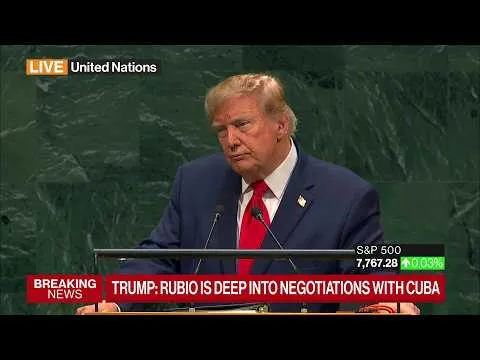
The Argument
President Trump's rejection of global AI control and optimism about Iran reflects a strategic shift towards unilateralism in U.S. foreign policy.
Evidence Base
- President Trump spoke at the UN General Assembly.
- He expressed optimism about a U.S.-Iran agreement after the midterms.
- Trump criticized global efforts to control AI.
- Trump reiterated beliefs about Cuba's political future.
Context
President Trump addressed the UN General Assembly, focusing on U.S. policy towards Iran and the global regulation of AI.
Focal Analysis
President Donald Trump's address to the United Nations General Assembly marks a significant moment reflecting his administration's approach towards key global issues, particularly focusing on Iran and artificial intelligence (AI). Trump's speech, as presented, navigates complex arenas of diplomacy and technology with a discernible lean towards American interests over multilateral cooperation.
President Trump's address arrives at a time fraught with geopolitical tensions. The United States' relationship with Iran has been a focal point for international diplomacy, punctuated by various sanctions and strained negotiations. Similarly, the rise of AI has prompted global discourse on ethical and secure management protocols.
In his speech, Trump expressed optimism about a possible agreement with Iran post-midterms. This suggests a potential strategic delay, indicating that his administration might be seeking a more favorable domestic political landscape before engaging in substantive diplomatic efforts. The choice to specify this timeline highlights a calculated approach, possibly indicating that Trump views political stability as a prerequisite for negotiations.
Trump's outright dismissal of what he describes as a global "scheme" to control AI further underscores his administration's skepticism of multinational governance frameworks. This statement aligns with his broader "America First" doctrine, prioritizing national sovereignty over global collaboration. The complexities of AI, including ethical considerations and international norms, require cooperative efforts for effective governance. By rejecting global controls, Trump may be positioning the U.S. as technologically autonomous yet isolated from global regulatory standards.
Trump's rejection of international regulation on AI and his optimism regarding Iran exemplify a broader strategic maneuver towards unilateralism. This approach reflects a prioritization of American influence and control in both foreign policy and technological advancement.
Critics argue that such unilateral policies may undermine the United States' ability to effectively address global issues. Ignoring cooperative frameworks in AI can lead to fragmented international standards, potentially generating competitive discord rather than advancements aligned with shared ethical norms. Critics also point out that excluding multilateral approaches to Iran might alienate allies and exacerbate tensions rather than fostering genuine dialogue.
Trump's stance could significantly shape the United States' diplomatic trajectories and its role in global technology discourse. A shift toward unilateralism might embolden national policies and negotiations but risks alienating allies and minimizing the country's influence in establishing global standards, especially in AI.
The international community's response to Trump's declarations will be pivotal. Observers will closely watch forthcoming negotiations with Iran post-midterms and assess how other nations navigate AI regulation amid U.S. resistance. Continued monitoring of these developments will shed light on the evolving dynamics of international politics and technology policy.
Room for Disagreement
Critics argue that unilateral approaches like Trump's can isolate the U.S. and hinder comprehensive global solutions.
Why It Matters
President Trump's stance may impact international relations and global tech policies, affecting U.S. diplomatic and economic interactions.
What's Next
Monitoring reactions from global leaders to Trump's statements and the upcoming U.S.-Iran negotiations post-midterms.