Special Reports
Saudi Defence Surge Tests the Kingdom's Fiscal Buffer
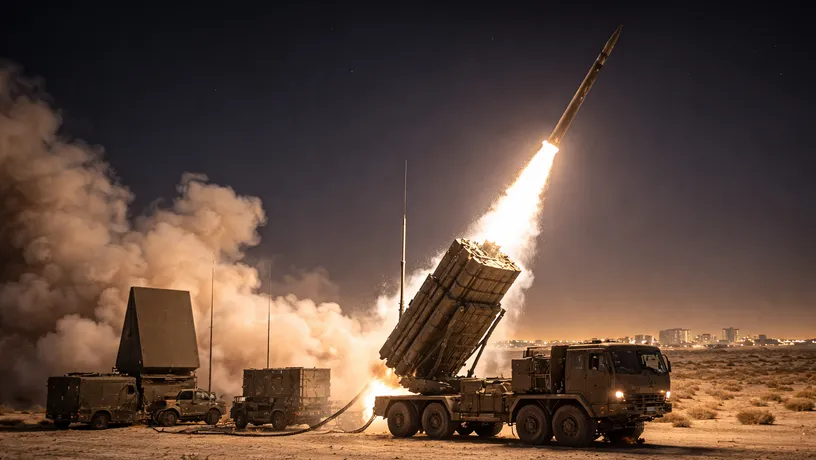
Military outlays jumped 26% as attacks and the Hormuz disruption widened the deficit, increasing pressure for harder choices over debt and Vision 2030.
The security shock did not break Saudi Arabia's economy. It did reveal how quickly defence, disrupted oil flows and transformation spending can compete for the same balance-sheet capacity.
Saudi Arabia can finance the immediate security shock, but sustained defence demands would narrow the room for simultaneous oil resilience, domestic transformation and global investment.
- Saudi military expenditure rose 25.9% year on year to SAR64.7 billion in the first quarter of 2026, the sharpest verified sign of the war's immediate budgetary cost.
- The wider first-quarter deficit reached SAR125.7 billion—76% of the deficit planned for the entire year—as expenditure rose 20% while revenue slipped.
- The quarterly shock moderated rather than disappeared. The second-quarter deficit narrowed to SAR34.3 billion, but the first-half shortfall reached roughly SAR160 billion.
- Riyadh entered the crisis with financing protection: the National Debt Management Center had secured about 90% of expected 2026 funding needs before the regional escalation.
- Saudi Arabia's East-West pipeline and higher oil prices cushioned the export shock, although the IMF still cut projected 2026 economic growth to 1.7%.
- The evidence supports a near-term fiscal reprioritisation, but not yet a conclusion that defence spending will permanently crowd out Vision 2030 investment.
SAR64.7bn Q1 2026 military expenditure
Equivalent to about $17.2 billion under the Saudi budget's functional classification.
+25.9% Year-on-year military increase
Compared with SAR51.4 billion in the first quarter of 2025.
SAR125.7bn First-quarter budget deficit
About 76% of the deficit originally projected for the whole of 2026.
SAR160bn First-half budget deficit
Approximately 97% of the original full-year deficit plan.
$83.2bn Estimated 2025 military spending
SIPRI ranked Saudi Arabia eighth globally.
3.0% Final Q1 real GDP growth
GASTAT revised its initial flash estimate of 2.8%.
The security shock
Saudi Arabia's military expenditure reached SAR64.7 billion in the first quarter of 2026, up from SAR51.4 billion a year earlier. The SAR13.3 billion increase represented growth of 25.9%, far exceeding the 1.4% real increase that SIPRI estimated for Saudi military expenditure across all of 2025.
The timing strongly connects the acceleration to the regional war. Saudi authorities reported Iranian missile attacks against the kingdom after Riyadh had said its airspace and territory would not be used for military action against Iran. Subsequent official statements described attacks on civilian objects, economic interests and energy infrastructure across the Gulf.
Yet the budget supplies no breakdown of the increase. It cannot establish how much covered interceptions, readiness, repairs, replenishment or accelerated procurement. First-half military spending subsequently reached SAR124.6 billion, about 52% of the SAR240 billion annual allocation—elevated, but not yet evidence of a full-year overrun.
The budget verifies the defence surge; it does not disclose how the money was used.
B
| Military expenditure | |
|---|---|
| Q1 2025 | 51.4 |
| Q1 2026 | 64.7 |
The fiscal mechanism
The military increase formed part of a much broader fiscal expansion. First-quarter expenditure rose 20% to SAR386.7 billion, while revenue declined to SAR261 billion. Oil receipts fell 3%, non-oil revenue gained 2%, and the resulting SAR125.7 billion deficit was more than twice the shortfall recorded a year earlier.
The second quarter was less severe: revenue recovered to SAR338.8 billion and the deficit narrowed to SAR34.3 billion. Even so, the first-half deficit of about SAR160 billion consumed roughly 97% of the original full-year plan. The IMF judged that full-year spending was likely to exceed the pre-war budget, although some first-quarter outlays were non-recurring.
Financing capacity reduces near-term danger. The debt-management authority had secured about 90% of expected funding before the escalation and said additional needs could be met through private channels and domestic markets. The harder question is allocation: the war landed as the Public Investment Fund was already shifting from rapid expansion towards capital efficiency and value realisation.
By mid-year, the deficit had nearly exhausted the amount budgeted for all of 2026.
| Revenue | Expenditure | Deficit | |
|---|---|---|---|
| Q1 2026 | 261 | 386.7 | 125.7 |
| Q2 2026 | 338.8 | 373.1 | 34.3 |
Resilience and strategic choice
Saudi Arabia was less exposed than Gulf producers wholly dependent on Hormuz because it could redirect some crude through the East-West pipeline to Yanbu on the Red Sea. The IMF concluded that this limited the fall in deliveries and that higher oil prices more than offset lower export volumes, creating a partial revenue cushion.
The domestic economy also proved more resilient than the initial data suggested. GASTAT revised first-quarter annual growth from a 2.8% flash estimate to 3.0%, with oil and non-oil activities both expanding 2.9%. The IMF nevertheless projected full-year growth of only 1.7%, reflecting disrupted trade, weaker confidence and continuing uncertainty.
The pressure is structural as well as cyclical. SIPRI estimated Saudi military spending at $83.2 billion in 2025, eighth globally and about 6.5% of GDP. The war therefore struck an economy already carrying a high defence burden. More investment in air defence, infrastructure resilience and domestic production is plausible; its eventual scale remains unknown.
Saudi Arabia's alternative export route softened the shock, but could not remove its fiscal consequences.
| Military expenditure | |
|---|---|
| United Kingdom | 89 |
| Ukraine | 84.1 |
| Saudi Arabia | 83.2 |
| France | 68 |
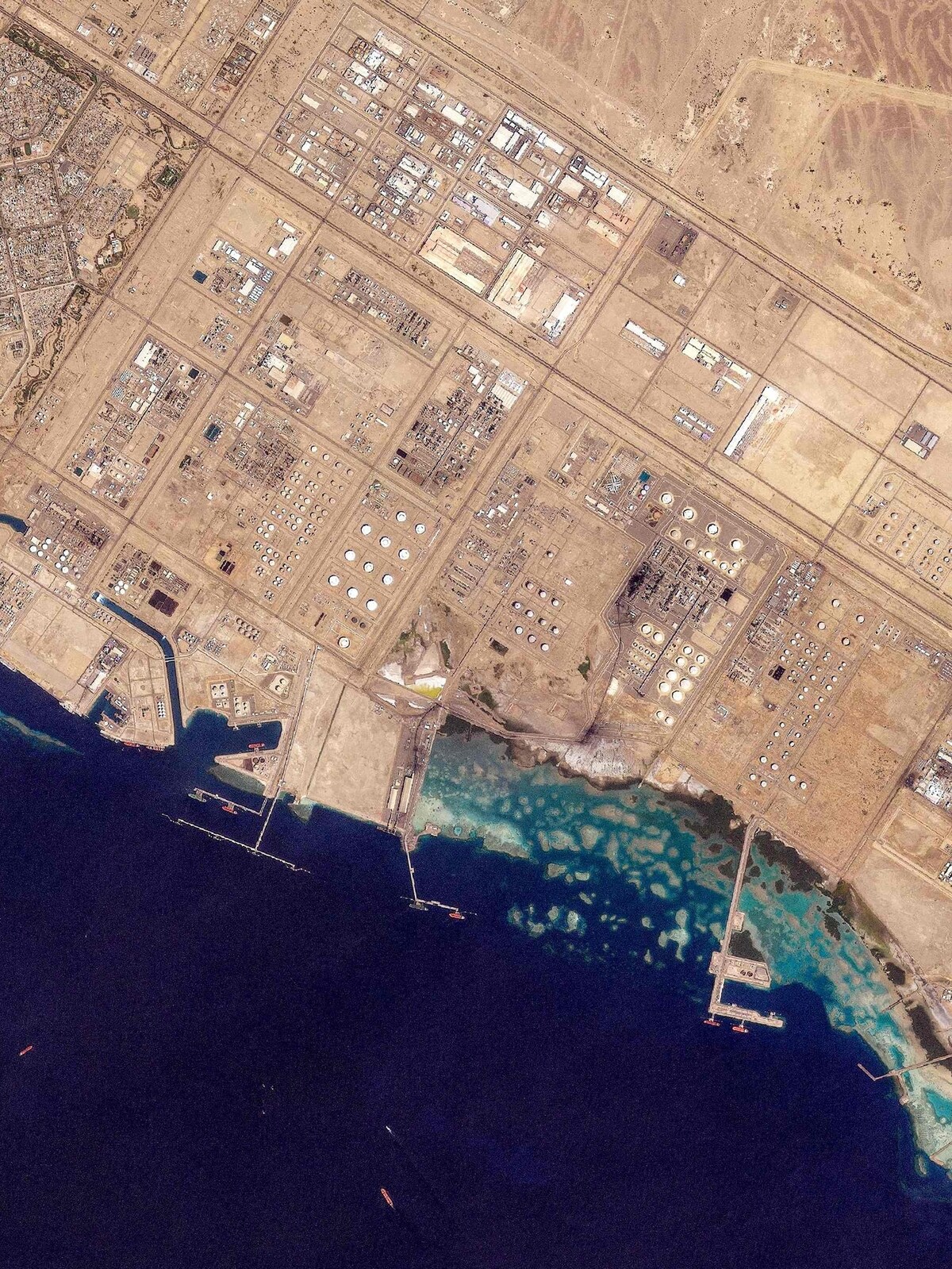
The first-quarter numbers should not be read as a straight-line forecast. The second-quarter deficit narrowed to SAR34.3 billion as oil and non-oil revenues improved. First-half military spending equalled about 52% of its annual allocation, close to a neutral six-month run-rate. The IMF also said part of the broader first-quarter expenditure increase reflected one-off payments.
Saudi Arabia retains relatively low public debt, substantial financial assets and diversified market access. Defence expenditure also protects the energy and logistics systems financing economic transformation, while procurement can support domestic industrial capacity. These factors weaken the claim that higher security costs must automatically displace productive investment or destabilise public finances.
The verified evidence shows a material, immediate security cost: military expenditure rose sharply, the first-quarter deficit overshot its prior trajectory and the government relied on borrowing rather than reserves. The war did not create Saudi Arabia's fiscal pressures, but it intensified the competition between defence, economic support and transformation spending.
It remains premature to declare a lasting fiscal rupture or the derailment of Vision 2030. The decisive indicators will be second-half military expenditure, project delays, off-budget support, debt accumulation and the durability of oil-export routes. Persistent conflict would make reprioritisation increasingly unavoidable; rapid normalisation could keep the shock manageable.
Confidence: Moderate-high. Confidence is high in the fiscal and military-spending data, moderate in attributing the full increase to the war, and lower on permanent crowding-out effects.
- Evidence was checked through September 23, 2026 against Saudi Ministry of Finance budget reports, National Debt Management Center statements, GASTAT releases, IMF surveillance, SIPRI data and official Saudi statements.
- Quarterly budget expenditure and SIPRI military-expenditure estimates use different definitions and periods. They are presented separately and have not been combined or directly annualised.
- The budget reports verify the increase in military expenditure but do not disclose its operational, personnel or procurement components. Attribution of the increase to the regional war is therefore an evidence-supported inference, not a disclosed accounting fact.
- GASTAT's April flash estimate of 2.8% first-quarter GDP growth was superseded by the final June estimate of 3.0%. Later data are used where available.
- Saudi Ministry of Finance · Quarterly Budget Performance Q1 of FY 2026 · 2026-05-05
- Saudi Ministry of Finance · Quarterly Budget Performance Q2 of FY 2026 · 2026-07-30
- National Debt Management Center · Completion of the 2026 Annual Borrowing Plan · 2026-05-05
- General Authority for Statistics · Saudi Economy Records 3.0% Growth in Q1 of 2026 · 2026-06-09
- International Monetary Fund · 2026 Article IV Consultation with Saudi Arabia · 2026-07-29
- Stockholm International Peace Research Institute · Trends in World Military Expenditure, 2025 · 2026-04-27
- Public Investment Fund · PIF Board Approves 2026–2030 Strategy · 2026-04-15
- Saudi Press Agency · Crown Prince Speaks with Iranian President · 2026-01-28
- Saudi Press Agency · Crown Prince Condemns Iranian Attacks · 2026-02-28