Trump's UN Remarks on Iran Signal Possible Confrontation
Former President Donald Trump's provocative UN speech raises concerns over US-Iran relations.
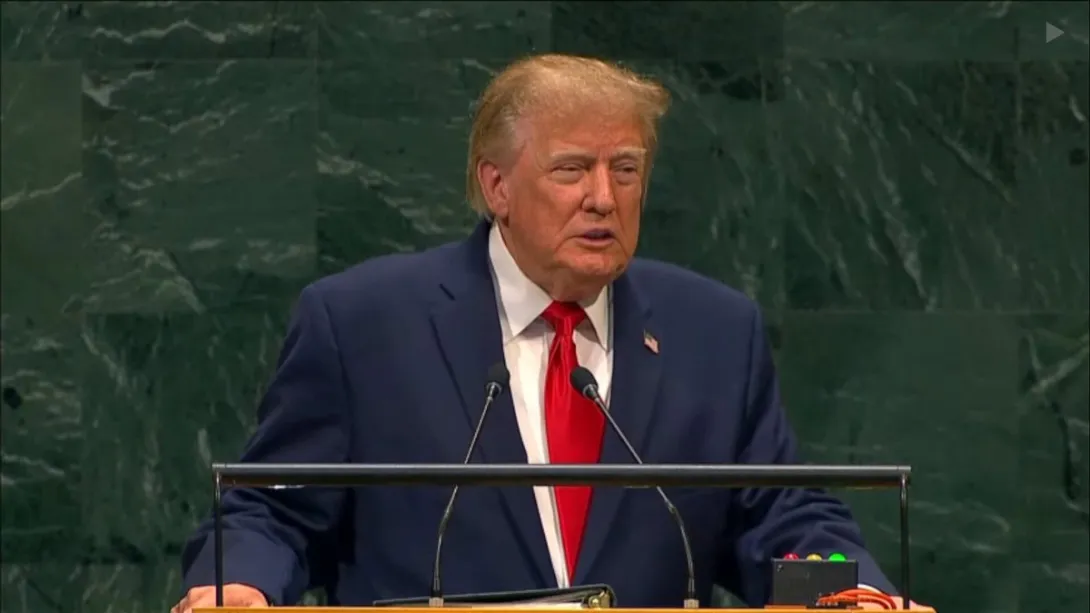
The Argument
Donald Trump's recent statements at the UN suggest he is weighing the possibility of aggressive military action against Iran, reflecting a continuation of his often provocative international rhetoric during and post-presidency.
Evidence Base
- Donald Trump recently stated at the UN that he has a critical decision to make regarding Iran.
- Trump mentioned two options: negotiating a deal with Iran or annihilating the Islamic Republic.
- Trump's language was markedly aggressive, potentially implying a military threat.
- This speech was reported by Disclose.tv on September 22, 2026.
Context
The statements were made during a UN address, publicized by Disclose.tv, showing Trump's inclination towards aggressive policy language often used in similar contexts to apply pressure or signal potential policy directions.
Focal Analysis
Trump's rhetoric at the UN hints at a continuation of his confrontational style, which defined much of his presidency. His remarks about a possible "annihilation" of Iran, while dramatic, must be interpreted in the context of his history of making hyperbolic statements aimed at gaining leverage in negotiations. The primary concern rests on whether such declarations will be followed by tangible policy shifts or actions, which could severely impact the geopolitical landscape.
Historical context shows that Trump's confrontations with Iran during his presidency included withdrawing from the Iran nuclear deal and imposing stringent sanctions on the country. Observers might see the recent comments as part of a broader strategy to demand concessions from Iran or reassess American military posture in the Middle East.
Evidence suggests that such rhetoric serves multiple purposes, from rallying domestic political support to framing international bargaining positions. Indeed, aggressive public statements can bolster a leader’s image at home while applying pressure abroad.
However, there are significant risks associated with escalating rhetoric, especially between countries with such fraught relations. Misinterpretations or miscalculations could escalate tensions accidentally into a military conflict, disrupting regional stability and global economic conditions. This potentiality requires careful navigation by all parties involved.
Room for Disagreement
Previous administrations, including Trump's, have often utilized strong rhetoric as a diplomatic tactic, which could imply that his comments are more posturing than an actual threat of military engagement.
Why It Matters
Trump's comments indicate a willingness to consider military action against Iran, which could destabilize the region.
What's Next
Monitor shifts in US diplomatic approaches and Iranian reactions; scrutinize military movements and peace negotiation activities.